Tuesday, May 25, 2010

What pencils can teach us about health care

I have not yet heard the comparison made between health care markets and the production of pencils, and surely I don't expect it any time soon. Yet I will argue this comparison is not only valid, but is essentially critical at this current point in time. Before you disregard me as crazy, off-base, or otherwise misguided, please – allow me to explain.

Two years ago President Obama's nominee to serve as the Administrator of the Centers for Medicare & Medicaid Services, Donald Berwick, made the following statement regarding health care in an article in the British Medical Journal:

"Please don't put your faith in market forces – It's a popular idea: that Adam Smith's invisible hand would do a better job of designing care than leaders with plans can. I find little evidence that market forces relying on consumers' choosing among an array of products, with competitors' fighting it out, leads to the healthcare system you want and need."

Furthermore, at a speech delivered in Wembley, England that same year, Berwick also said the following:

"I cannot believe that the individual health care consumer can enforce through choice the proper configurations of a system as massive and complex as health care. That is for leaders to do."

According to Berwick, any health care system is immensely so complex that it must necessarily involve a vast bureaucracy of government officials to plan, coordinate, and deliver health care services to consumers.

But here's the deal: Berwick has it exactly backwards. It is precisely because health care markets are so complex that it necessarily requires the absence of central planning in order to efficiently and effectively deliver service to consumers.

Which brings me to the pencil. Over fifty years ago, Leonard Read published his thought-provoking essay, "I, Pencil." If you have never read it, I would strongly urge you to take the ten minutes to do so.

At the beginning of his essay, Read states his purpose:

"I have a profound lesson to teach. And I can teach this lesson better than can an automobile, or an airplane or a mechanical dishwasher because – well, because I am so seemingly simple. Yet not a single person on the face of this earth knows how to make me."

Read points out that while "millions of human beings have had a hand in my creation," that "there is a fact still more astounding: The absence of a master mind, of anyone dictating or forcibly directing these countless actions which bring me into being… Instead, we find the Invisible Hand at work."

And this is where Read, and current bureaucrats and politicians like Berwick, are completely at odds with one another. But I ask you: Read what Leonard Read has written. Read further about what Donald Berwick has written and said. Make your own conclusions. Are you in agreement with Berwick that "leaders with plans" can do a better job of coordinating products, care, and delivery, at the right time, to the right place, in the right quantities at the lowest possible cost? Or are you in agreement with Read that the best way to achieve this is through "the configuration of creative human energies.. configuring naturally and spontaneously in response to human necessity and desire and… in the absence of governmental or any other coercive masterminding"?

Health care markets are immensely more complex than the production of pencils. Yet Read successfully shows how trying to centrally plan the manufacture and distribution of even simple pencils is essentially futile. And if it can't be done for the simple pencil, how could it possibly be successfully done in health care?

A simple pencil – but a profound lesson: "If you can become aware of the miraculousness which I symbolize, you can help save the freedom mankind is so unhappily losing."

Thursday, May 6, 2010

The “war on drugs” in action

I'm afraid I'm going to ruffle some feathers with this one, getting some significant agreement and disagreement from various folks, but this needs to be seen. But first a warning: This video contains graphic and objectionable content and material, as well as foul language. Do not watch it if you are not comfortable with that.

I certainly don't advocate smoking marijuana – especially when one has children to care for. But I also don't advocate having SWAT teams storm residential houses terrorizing the family inside, firing shots, and killing the family dog simply because the father has a little bit of pot on hand – a drug 42% of Americans have tried.

Agree with me or disagree with me, these are the facts: This is what the war on drugs looks like, and you need to be aware of it.

http://reason.com/blog/2010/05/05/video-of-swat-raid-on-missouri

Is $12,000 enough?

"You hear a lot of stuff about how we need to run the district more like a business, but the school district doesn't sell a product for a profit. We rely on government money."

Toledo school board President Bob Vasquez, after voters overwhelmingly repudiated a tax hike to maintain funding to the city's public schools


Sit and think about that quote for a minute. Certainly, public schools are not run like businesses. But, ask yourself this: What if they were?

  • What if schools had to please parents in order to stay in business?
  • What if schools had to properly educate kids, and show progress over time, or risk going out of business?
  • What if schools were forced, like any business, to run efficiently and maintain a cost structure that is sustainable?

In short, what if all public schools had to behave more like most private and many charter schools do already? Would these be bad things? Certainly not, in my book. But if you're still uncertain, let's turn the tables.

Take your local grocery store. What if grocery stores were run by the government and funded by taxes? In this scenario, would you expect to see better service from the government grocer than you get from your local for-profit grocer, or worse? More importantly, would you expect to see lower prices from your government grocer, or higher? Would the store hours be more consumer-friendly or less?

Most of us realize turning over our grocery stores to the government would not be a good thing. So why do we accept it for the far more important job of educating our children?

We need to realize that government funded does not have to mean government run. After all, that's how the food stamp program works. In essence, food stamps are a "voucher" that poor people can use to buy groceries at the store of their choice. Yet when it comes to the more important matter of educating their children, politicians refuse to give these same parents vouchers to select the best school for their child. Where is the common sense?

It seems to me the best way to improve our education system would be if they were actually run like businesses – or at least non-profits that couldn't use state coercion to raise ever increasing amounts of money. In fact, most private schools are run as cost-efficient non-profit businesses, knowing full well that they need to sell a product at a reasonable price that satisfies the consumer in order to stay a viable concern.

Toledo voters feel the $12,000 they spend per student each year should be enough to ensure a high quality education. And given the right education structure, laden with choice and competition, it certainly should be. But until politicians get the courage to change the system, our only choices will continue to be more and more spending, or unfortunate cuts for students. It is time to change the system.

Friday, April 30, 2010

Stop the insanity

Back in September of last year, Forbes ranked Wisconsin as the third worst state for business. Given that, yesterday's news that Harley Davidson may consider leaving the state as it searches to lower manufacturing costs by $54 million should come as no surprise.

What is more surprising – and upsetting – is the fact that as of February, Wisconsin now has more government jobs than manufacturing jobs. Year-over-year government employment has increased a half percent (due to increases at the local government level), while manufacturing employment has decreased 6%. (State government employment dropped 4%).

Of course shrinkage in employment in manufacturing, or any private sector industry, is what one would expect during a recession like the one we are experiencing. What puzzles me is the growth of government over that same time period. It appears that in good times, government grows, and in bad times, government still grows – only more slowly.

The reason this is important is because all government wages are paid for out of private sector wages, via taxation. While government employment grew by 1800 jobs over the past year in Wisconsin, private sector jobs fell by 75,000. Thus, we have fewer private sector workers supporting more government workers. And people working and earning in the private sector are the only resource that government has. Because of that, this is not sustainable.

Exacerbating this is the fact that government jobs are more costly than private sector jobs, mainly due to unionization. While the unionization rate in the private sector has fallen from 30% in 1965 to just 7% today, 39% of state and local government workers are currently unionized. The high wages and generous benefits packages that public sector unions negotiate for their members are paid for by taxpayers.

Now, I'm all for workers lobbying and fighting for the best pay they can get in a competitive environment. But have you ever stopped to think about why the unionization rate is so much lower in the private sector than in the public sector? The simple answer is "competition." Private sector businesses are subject to competition, and don't have the luxury of forcibly taking more money from their customer base in order to fund unsustainable cost structures. In contrast, government has no competition. Which DMV are you going to choose? That's right – the only one there is.

It is important to remember that every dollar that is taken out of the private sector in order to fund government leaves one less dollar in the private sector to invest in creating new jobs and increased wealth. No matter how important or vital some of the things government does for us (police protection, transportation infrastructure, etc.), government does not create wealth. But government can help create a positive environment for the private sector to do just that.

Would that our State Legislature was actually doing that, I would not be writing this right now. Unfortunately that is not the case. Wisconsin is projected to have a $2 billion budget deficit next year. Given the past, we know that the likely response of our current state and local legislators will be to increase the size of government, and add more regulations and taxes making it harder for Wisconsin businesses to grow and expand, and harder for hard-working taxpayers to keep their own money.

Don't get me wrong – I am not for coddling businesses. I am not for giving businesses special deals to "buy them off" and induce them to stay in our state. What I am for is creating an environment that allows businesses to operate free of the costly regulations and taxes that drive up the cost of doing business and hiring workers.

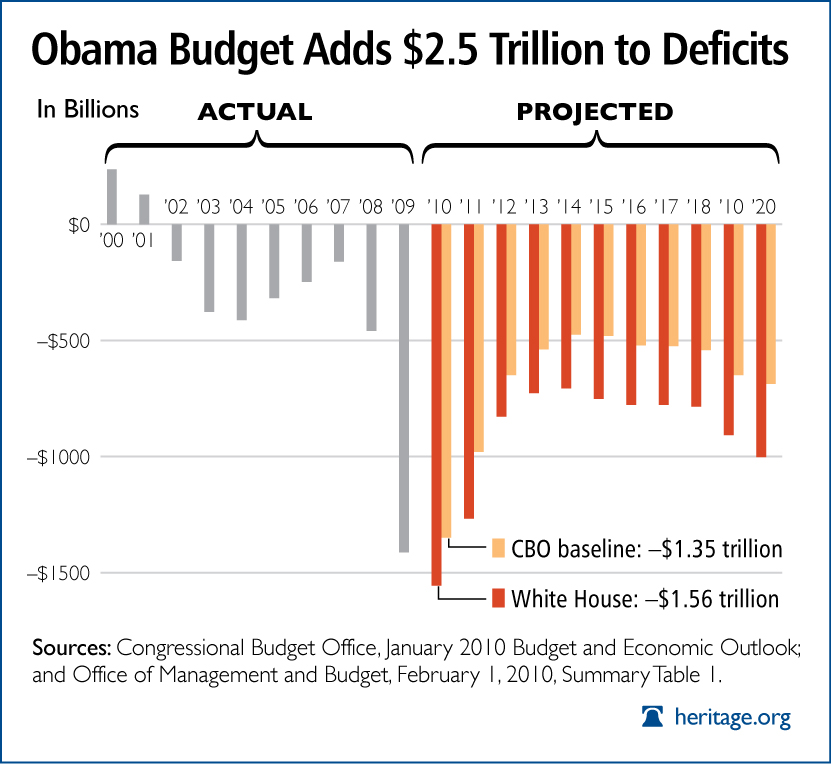
We simply can't continue milking taxpayers and businesses in order to fund an ever growing government. This year the federal budget deficit alone is projected to be more than the entire federal budget was in just 1995. This isn't just a state or local problem – it is a national problem. The way out of the woods doesn't rest with Democrats. It doesn't rest with Republicans. And it certainly doesn't rest with career politicians of any political persuasion. It is going to require electing common sense citizens with a strong adherence to the principles of limited government, who are willing to make the necessary difficult choices.

Until we do that, we'll simply continue reaffirming the oft-stated definition of "insanity": Doing the same thing over and over and expecting different results.

Let's stop the insanity.

Thursday, April 22, 2010

Obama’s “Read my lips” moment

As I have heard conservative pundits over the past several weeks insisting that a VAT tax was all but a sure thing in the very near future, I generally tossed it off as an effort to simply rile up their base. Then I see this headline yesterday:

"Obama suggests value-added tax may be an option"

Oops.

Those of us who follow politics closely can't help but recall then-candidate Obama's oft repeated promise to not raise any taxes on those making under $250,000. A VAT tax – which is assessed on goods at each step of the way as they move through the production and distribution system to the retailer – would ultimately raise the price of goods to consumers as the tax is built into the price. Surely, if enacted, this would qualify as a serious and material broken campaign promise then, right?

But then I see this comment by the president from his weekly radio address on April 10th:

"And one thing we have not done is raise income taxes on families making less than $250,000. That's another promise we've kept." [Italics mine]

It is clear what is happening here. The federal government has once again passed a massive entitlement program which we cannot afford, but was sold to the public as a fully funded deficit reduction package. Most people believe that in reality additional funding sources are going to be needed in the form of increased taxation. So the President is slowly and retroactively modifying his prior campaign promise in order to open the door to a potential VAT tax.

This largely helps explain why a recent Rasmussen Poll found that only 8% of Americans expect a tax cut under President Obama, even though the President campaigned on a promise to cut taxes for 95% of Americans.

The President also recently said that we need to determine "the core services that we need and the government should provide. And then we decide how do we pay for that." I couldn't agree more. I'll refer the President to Article I, Section 8 of the U.S. Constitution which spells out clearly the seventeen enumerated powers of Congress, and Article II, Section 2 which spells out the powers of the Executive Branch. This – and only this – is what the Federal government has the power to do. The Tenth Amendment leaves all other powers to the state governments and to the people.

I'm no fool. I realize pretty much all politicians lie and break promises. But that doesn't mean we don't call them out on it when it happens - or when we suspect they might be laying the groundwork to make it happen, as in this case. And it also justifies many Americans' rational suspicion towards the massive "reform" packages politicians of all stripes have been trying to sell to the American people lately. Most of the time the bill-of-goods being sold is not quite exactly what it is purported to be.

Will this be President Obama's "read my lips" moment? Will he really push for a tax that the Senate just voted 85-13 to declare it as a "massive tax increase that will cripple families on fixed income"? Or will he live up to his campaign pledge to not harm the middle class with any tax increases?

One can hope. Unfortunately it was also "Hope" that got us to this point in the first place.

Thursday, April 15, 2010

Tax stats

Given that today is tax day, I thought I'd have a little fun with some random tax statistics, juxtaposed against some other random stats. Here you go:


  • $27.7 billion ….. amount spent by Americans to prepare their taxes this year – enough dollar bills to circle the world 105 times if laid end to end

  • 3.7 million ..… number of words in the Federal tax code

  • 788,000 ….. number of words in the Bible


  • 63 ….. number of pages my tax filings were this year


  • 127 ….. the number of years the Federal government was able to function WITHOUT a Federal income tax


  • 1913 ….. the year the 16th Amendment was added to the Constitution, authorizing the Federal income tax


  • 1% ….. the percentage of the population that was required to pay Federal income taxes after the 16th Amendment and associated tax laws were passed


  • 53% ….. the percentage of the population that currently pays a Federal income tax


  • 400 ….. the number of pages in the Federal tax code in 1913


  • 68,000 ….. the number of pages currently in the Federal tax code


  • 600 ….. the number of pages in a 1945 Boeing B-17 Bomber design spec manual


  • 40% ….. the percentage of total income taxes paid by the top 1% of earners


  • 66% ….. the percentage of Americans who say we're overtaxed


  • 81% ….. the percentage of Mainstream Americans voters who say we're overtaxed


  • 74% ….. the percentage of those in the Political Class who disagree with the above 81%


  • 95% ….. percent of Americans President Obama said would get a tax cut under his Administration


  • 8% ….. the percent of Americans who think their taxes actually WILL be cut during President Obama's term


  • 46% ….. percentage of Americans who currently expect a tax hike under President Obama


  • 115,000 ….. the number of people employed by the IRS


  • $10.7 billion ….. the expense budget of the IRS in 2007


  • 6 ….. the number of days the average American has worked so far this year accumulating disposable personal income for themselves and their family. The first 99 days were for the government.

Tax Freedom Day was April 9th this year.

Friday, March 26, 2010

Closing the achievement gap

Wisconsin boasts one of the highest high school graduation rates in the nation. But does that mean we should just sit back and breathe a collective sigh of relief, and pat ourselves on the back? No, it surely does not.

Consider this: The graduation rate for white students in our state is 86%. But the graduation rate for African Americans is only 44%, and for Hispanics only 48%. This incredible achievement gap is hardly anything to be proud of.

Data shows that Wisconsin citizens who drop out of high school are significantly more likely to be unemployed, need government assistance (Medicaid, etc.), and be incarcerated. In addition, high school dropouts earn on average $10,000 less per year than high school graduates. None of this is shocking – it all makes intuitive sense.

While this achievement gap results in very negative effects for the dropouts themselves, it also has significant negative financial implications for our state, mostly in the form of lower tax revenues and greater social costs, particularly pertaining to health care and incarceration. One study estimates that high school dropouts cost our state almost $400 million each year.

It is clear that increasing high school graduation rates, and closing the achievement gap, would be beneficial not just for the dropouts themselves, but for all Wisconsin citizens. So how do we do that?

We need to reform our education system by adding the elements of choice and competition to what right now is basically a state run monopoly. And we all know what type of results monopolies typically produce - mediocre. Choice and competition leads to better products, better service, and better outcomes, all at lower prices, in every other industry. It's time to utilize the power of the marketplace to improve our public education system.

The fact of the matter is, a lack of choice and competition in education hurts low income and minority families the most, because it is in the less wealthy school districts where we typically find the most problematic schools. To be sure, there are multiple reasons for that. But one thing we do know is that evidence shows that adding choice and competition, particularly in poorer and heavily minority districts, leads to better educational outcomes.

Take Milwaukee for instance, where a recent study just showed that students receiving vouchers in the twenty-year-old Milwaukee school choice program are graduating at a 77% rate, compared to a 65% rate for Milwaukee public school students. If over the past six years public school graduation rates had matched the rate for voucher students, an additional 3,352 students would have graduated, annually adding an additional $21.2 million in personal income for those students, and $3.6 million in extra tax revenue for the state.

And yet the state continues to cap enrollment in this successful program.

Other studies that look at voucher programs across the nation frequently show the strongest statistically significant gains occurring for minority students, particularly African Americans and Hispanics. It is no wonder then that some of the strongest supporters of vouchers are minority parents.

Private and charter schools across the nation have frequently shown successful models for educating our most vulnerable children. One need only look at American Indian Charter School in Oakland, CA, or the KIPP Schools, or the Edward Brooke Charter School in inner city Boston (which boasts some of the highest test scores in the city), the D.C. Voucher Program, or any multitude of religious and other private schools that typically spend less per student than the local public schools, but achieve better results. The reason they are able to do this? They are free of so many of the shackles, rules, and restrictions that stifle our public schools and prevent them from innovating. That and the fact that they have to compete for students, please parents, and produce results - or risk going out of business.

So here we have a problem – a great achievement gap between white and minority students – and we have proven techniques for closing that gap in charters and vouchers. Yet our state legislators continue to defend the status quo, protecting special interests within the education establishment at the expense of our children – particularly our most vulnerable children.

How long before we stand up and say "Enough is enough!"? Choice and competition in education is good for our state and our economy. But more importantly, it is great for our children.